Dev Kantesaria: The Doctor-Turned-Investor Behind Valley Forge Capital
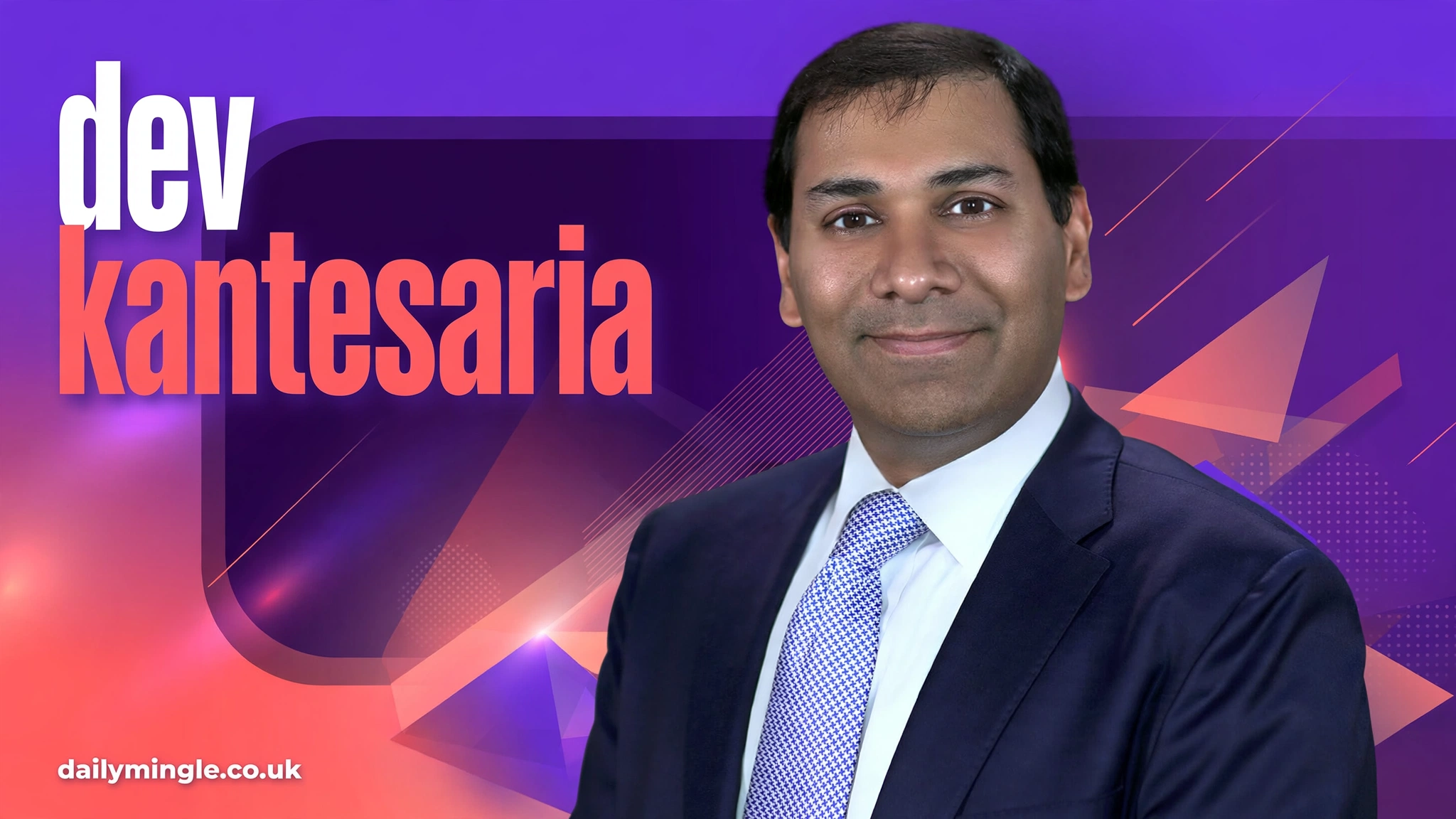
A Harvard-trained doctor who walked away from surgery, a venture capitalist who spent nearly two decades backing biotech startups, and a fund manager who runs one of the most concentrated portfolios on Wall Street. Dev Kantesaria is all three — and his unusual journey is exactly why professional and amateur investors study him so closely.
In 2007, Kantesaria founded Valley Forge Capital Management to prove a simple idea: owning a tiny handful of exceptional businesses beats owning dozens of average ones. Nearly two decades later, the record suggests he was right. His fund has beaten the S&P 500 by a wide margin since inception while holding as few as eight stocks at a time, turning extreme patience into one of the most admired track records in the investing world.
| Fact | Detail |
|---|---|
| Full name | Devang V. Kantesaria, M.D. (known professionally as Dev Kantesaria) |
| Profession | Founder, Managing Partner and Portfolio Manager |
| Firm | Valley Forge Capital Management (founded July 2007) |
| Firm headquarters | Miami, Florida (originally based in Pennsylvania) |
| Assets managed | More than $3 billion (firm’s official site); over $4 billion cited in December 2024 |
| Education | B.S., Massachusetts Institute of Technology; M.D., Harvard Medical School |
| Career before founding the firm | McKinsey & Company; TL Ventures; Devon Park Bioventures |
| Investment style | Concentrated, long-biased equity; “quality growth” compounding machines |
| Typical portfolio | 8 to 12 stocks; top five positions exceed 90% of public-equity holdings |
| Largest holdings (2026 filings) | Fair Isaac (FICO), S&P Global, Moody’s, Mastercard, ASML |
| Nationality | American |
| Age / birth date | Not reliably documented in public sources |
Who Is Dev Kantesaria?
Dev Kantesaria is the founder, managing partner, and portfolio manager of Valley Forge Capital Management, a Miami-based investment firm known for one of the most concentrated, long-term portfolios in the business. The firm manages more than $3 billion in equity investments, according to its official site, and it has outperformed the S&P 500 by a wide margin since its 2007 inception.
He is a rare figure in finance: a trained physician who traded medicine for management consulting, then spent roughly 18 years as a venture capitalist before launching his own fund. Because several people share the “Dev” nickname online, it is worth being precise — the Dev Kantesaria that investors follow is the founder of Valley Forge Capital Management, not a namesake in any other industry.
A Doctor Who Fell in Love With Stocks at Eight
Kantesaria has said his fascination with equities began when he was eight years old, making the stock market a lifelong hobby long before it became his profession. Growing up, however, his dream was entirely different: he wanted to become a world-renowned surgeon, and he aimed his entire education at that goal.
Education at MIT and Harvard
He earned his Bachelor of Science at the Massachusetts Institute of Technology, where he worked as a research scientist at the Whitehead Institute for Bio-Medical Research and the MIT Center for Cancer Research, studying immunology and protein chemistry and co-authoring two peer-reviewed publications. He then attended Harvard Medical School, earning his M.D. between 1994 and 1998 and graduating at the top of his class, as noted during his 2024 interview on The Investor’s Podcast Network.
The Third-Year Turning Point
Everything changed during his third year of medical school, when hospital rotations began. He loved the intellectual side of medicine but realized that practicing it was very different from what he had imagined — harder, grittier, and not something he wanted to do for the next 30 or 40 years. Finance, and equities in particular, had always been his passion, so he applied to McKinsey & Company for a management consulting role. He later joked that McKinsey was the only option he gave himself: had they rejected him, he would be a surgeon today.
McKinsey and Nearly Two Decades in Venture Capital
After two years at McKinsey as a senior consultant advising the senior management of large biotechnology and pharmaceutical companies, Kantesaria joined TL Ventures as a principal in February 2000. He later became a general partner at Devon Park Bioventures. In total, he spent roughly 18 years as a venture capitalist, working with hundreds of CEOs and sitting on numerous company boards.
That operating experience became his secret weapon. He has explained that living inside private companies — sourcing deals, doing due diligence, negotiating, and helping founders run their businesses — taught him how to judge real businesses in a way most public-market investors never learn. It is fairly rare in the public-equity world, and it gave him unusual confidence when he eventually started picking stocks himself.
Founding Valley Forge Capital Management in 2007
In July 2007, Kantesaria launched Valley Forge Capital Management. Business Insider reported that he started the fund with just $126,000, and within 12 years it had grown past $500 million — a rise of nearly 4,000 times the original capital, driven entirely by performance and the compounding of client money.
From the start, the philosophy was unapologetically concentrated. “We believe that the only way to outperform is a concentrated portfolio of your best ideas,” he told Business Insider. “Why would you want to invest in your 15th best idea?” Where many managers hold 25, 30, or even 50 names, Kantesaria called that “absolute silliness” — every additional holding, he argued, makes it mathematically harder to beat the market.
Early coverage of the firm emphasized a long-biased equity strategy that buys companies at discounts of roughly 30 to 60 percent to his estimate of intrinsic value, seeks “compounding machines” that can grow that value over many years, and keeps turnover low to stay tax-efficient. The firm controls risk not with leverage, options, or hedging, but by avoiding debt-laden companies and speculative securities entirely.
The Valley Forge Playbook: Predictability Above All
Kantesaria’s strategy can be boiled down to two strict tests. A business must have a durable, easy-to-understand model whose economics have been proven for decades, and it must be able to grow its intrinsic value in the high teens to low twenties percent annually for ten years or more. Predictability is his north star — he would rather give up a few points of growth than own something that could blow up.
Extreme Concentration: 8 to 12 Stocks
Valley Forge typically holds just eight to twelve positions, chosen from a watchlist — what Kantesaria calls a “fishing pond” — of only about 50 companies. The top five positions routinely make up more than 90 percent of the public-equity portfolio. He expects more than 90 percent of his ideas to work out, compared with roughly 60 percent for a typical manager, which is why he researches each candidate for years. He once studied Fair Isaac for seven to ten years before buying a single share.
What He Buys: Toll-Booth Businesses
His favorite companies are what he calls “toll-booth” businesses: credit-rating duopolies, global payment networks, and indispensable software platforms that can raise prices a few percent above inflation almost every year. They require little reinvestment and funnel enormous free cash flow into share repurchases instead of splashy acquisitions. He also insists on management teams that think like owners and let earnings per share grind higher rather than chasing headline revenue.
What He Refuses to Own
The avoidance list is just as important. He stays out of highly acquisitive roll-ups, speculative biotech, commodity producers, and — as of his 2024 interview on The Investor’s Podcast Network — most big tech names. He avoids currencies, futures, commodities, and what he calls “cigar-butt” stocks: companies that look cheap but lack organic growth and rarely improve, even under strong management. He also skips put options and other forms of what he views as ineffective financial engineering.
Temperament as a Strategy
Kantesaria views his own temperament as a competitive advantage. He has said that 99.9 percent of the active-management industry adds no value, and that the rare managers who do earn it through discipline: they do not get happy when the market rises or sad when it falls. His guiding test is simple: “If you are worried about next quarter’s results, then you are likely in a business with too low predictability.”
The Portfolio: What He Owns Today
The firm’s quarterly SEC 13F filings reveal one of the most concentrated large-cap portfolios in the industry. According to Insider Monkey’s Valley Forge Capital profile, which tracks those filings, the June 2026 report showed these top positions:
| Holding | Ticker | Share of 13F portfolio |
|---|---|---|
| Fair Isaac Corp | FICO | ~25.8% |
| S&P Global Inc. | SPGI | ~19.9% |
| Moody’s Corp | MCO | ~19.1% |
| Mastercard Inc. | MA | ~17.6% |
| ASML Holding N.V. | ASML | ~10.9% |
Each name tells the playbook’s story. Fair Isaac, his largest holding, is a near-monopoly on U.S. consumer credit scores with extraordinary pricing power — the company doubled its mortgage-score prices in just two years. Kantesaria bought S&P Global during the depths of the 2009 financial crisis, when rating agencies were under attack, and he has owned Moody’s for roughly 17 years. Mastercard and ASML fit the same template: capital-light franchises that become more valuable with scale.
His view of valuation follows the same logic. “Getting worked up over whether a stock trades at 26 or 29 times earnings,” he has said, “is far less important than making sure you own the right business.” When you intend to hold for a decade or more, owning the right company matters far more than timing the entry perfectly.
The Track Record: Beating the S&P 500 Since 2007
Since its 2007 inception, Valley Forge has beaten the S&P 500 by a wide margin, a record the host of The Investor’s Podcast Network highlighted when Kantesaria returned to the show in December 2024, by which point the firm managed more than $4 billion. Independent estimates have placed the fund’s annualized return at roughly 15 percent since inception, against about 10 percent for the index over the same period — though those figures are estimates, not audited returns published by the firm.
The firm’s own site describes Valley Forge as managing more than $3 billion in equity investments, while 13F data trackers have put the mid-2026 public-equity portfolio at just over $3 billion. By late 2024, his top holding Fair Isaac had surged more than 100 percent in the prior year alone, a vivid illustration of what patience plus pricing power can produce.
What Everyday Investors Can Learn From Dev Kantesaria
Valley Forge is an institutional hedge fund, not a mutual fund you can buy into, but his framework translates surprisingly well to individual investing:
- Quality over quantity. A handful of superb businesses beats a long list of mediocre ones. He treats every new position like a precious “punch” on a limited lifetime punch card.
- Be a business analyst, not a market analyst. This Charlie Munger maxim is one of his guiding quotes: study companies, not macro forecasts or market noise.
- Demand predictability. If you cannot sleep comfortably through a bad quarter, the business is not predictable enough — pick a better one.
- Think in decades. He expects to hold positions for ten years or more. Constant churn, in his view, signals a poor process chasing short-term results.
- Price for patience. Buying at a meaningful discount to intrinsic value and letting compounding do the work matters more than perfect timing.
Note that this is educational background, not financial advice. His 13F filings are also snapshots with a 45-day reporting lag, so they describe what he owned weeks ago — useful for study, not a live portfolio to copy.
FAQs About Dev Kantesaria
Who is Dev Kantesaria?
Dev Kantesaria (full name Devang V. Kantesaria, M.D.) is the founder, managing partner, and portfolio manager of Valley Forge Capital Management, a Miami-based investment firm he started in 2007. He is known for running an extremely concentrated portfolio of 8 to 12 high-quality stocks and for beating the S&P 500 by a wide margin since inception.
What did Dev Kantesaria do before finance?
He trained as a physician, earning a B.S. from MIT and an M.D. from Harvard Medical School. After deciding against practicing medicine, he spent two years at McKinsey & Company and roughly 18 years as a venture capitalist at TL Ventures and Devon Park Bioventures before founding his own firm.
What is Dev Kantesaria’s investment strategy?
He buys “toll-booth” businesses — dominant, capital-light franchises with pricing power, such as credit-rating agencies and payment networks — holds only 8 to 12 of them at a time, and intends to keep each for a decade or more. He buys at a discount to his estimate of intrinsic value and favors companies that return cash through share buybacks.
What stocks does Dev Kantesaria own?
His largest publicly disclosed holdings include Fair Isaac (FICO), S&P Global, Moody’s, Mastercard, and ASML, with the top five making up more than 90 percent of his 13F portfolio. Note that 13F filings only cover U.S.-listed equities and are published 45 days after each quarter ends, so they are always a delayed snapshot.
What is Dev Kantesaria’s net worth?
His personal net worth is not reliably documented in public sources. Published figures describe the size of his fund — more than $3 billion under management — which is not the same thing as personal wealth. Estimates of individual net worth that appear on low-quality biography sites should be treated with skepticism.
How can I learn more about his thinking?
His two most detailed public conversations are his December 2024 episode on The Investor’s Podcast Network and his October 2022 interview on Good Investing Talks, both of which walk through his philosophy in depth.
Conclusion
Dev Kantesaria’s career reads like a deliberate argument against rushing: a doctor who studied a single stock for a decade before buying it, a venture capitalist who spent 18 years learning businesses from the inside, and a fund manager who holds eight stocks while the industry churns hundreds. Valley Forge Capital Management’s record since 2007 — a concentrated book of toll-booth franchises, compounding patiently past the S&P 500 — suggests that in investing, as in medicine, careful diagnosis and a steady hand beat frantic motion. Whether or not you ever hold his stocks, his playbook is a masterclass in doing less, better.
Keep exploring: founders and financiers with stories worth knowing
If profiles of sharp business minds are your thing, don’t miss our story on Richard Fairbank, the banking disruptor who built Capital One, and our profile of Ralph Cox, another notable figure in the finance world.
For more carefully researched celebrity biographies, visit Daily Mingle.